
What Is a BTU? A Complete Guide to HVAC Sizing, Efficiency & Smart Selection
What Is a BTU? A Complete Guide to HVAC Sizing, Efficiency & Smart Selection
Introduction: Why BTU Matters More Than You Think
If you're shopping for a new air conditioner, heat pump, or furnace, you've likely encountered the term BTU—but what does it actually mean, and why should you care?
BTU stands for British Thermal Unit, a standard measurement of thermal energy used across the heating, ventilation, and air conditioning (HVAC) industry. In simple terms, one BTU is the amount of heat required to raise or lower the temperature of one pound of water by one degree Fahrenheit.
While that definition sounds technical, the practical implication is straightforward: BTU rating tells you how much heating or cooling power a system can deliver. Choosing a unit with the correct BTU capacity is the single most important factor in ensuring your home stays comfortable, your energy bills stay manageable, and your equipment lasts its full lifespan.
This guide explains everything you need to know about BTUs—from sizing calculations and common mistakes to cost estimation and professional load assessments. Whether you're a homeowner, a facility manager, or an HVAC professional, this article equips you with the knowledge to make smarter, more cost-effective decisions.
What Does BTU Mean in HVAC?
In the context of air conditioners and heat pumps, BTUs measure the rate at which a system removes heat from your indoor space. For example:
·A 12,000 BTU air conditioner removes 12,000 BTUs of heat per hour from your home and transfers it outdoors.
·A 36,000 BTU system does exactly three times that work—making it suitable for larger spaces.
This heat-removal process is what creates the "cooling effect" you feel. The higher the BTU rating, the more powerful the system—but more power isn't always better. Proper sizing is everything.
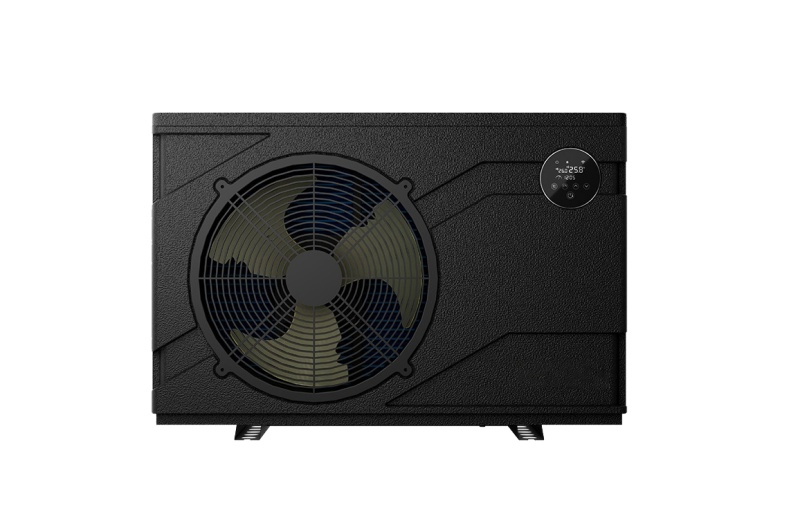
Why BTU Sizing Matters – The Goldilocks Principle
Getting the BTU rating right is not a guessing game. An improperly sized system—whether too large or too small—leads to:
Problem | Oversized (Too Many BTUs) | Undersized (Too Few BTUs) |
Energy Efficiency | Short-cycling wastes energy | Runs continuously, never reaches set temperature |
Comfort | Poor dehumidification, sticky air | Uneven cooling, hot spots |
Equipment Lifespan | Increased wear from frequent on/off cycles | Overworked compressor, premature failure |
Utility Costs | Higher than necessary | Constantly running at peak load |
Professional HVAC contractors use a Manual J Load Calculation—a detailed mathematical model that accounts for square footage, ceiling height, window size, insulation levels, climate zone, and even shading—to determine the exact BTU requirement for your home.
Pro Tip: Always request a Manual J calculation from your HVAC technician. If two contractors recommend different unit sizes, ask each to show their calculations. The one with a detailed, transparent load analysis is likely the more reliable partner.
How Many BTUs Do I Need for Cooling? (Quick Reference)
As a general rule of thumb, cooling systems require approximately 20 BTUs per square foot of living space. This estimation has evolved over the years due to improved building materials and insulation standards:
Time Period | Rule of Thumb |
30+ years ago | 500 sq. ft. per ton (500 SF/ton) |
Recent existing homes | 600 sq. ft. per ton (600 SF/ton) |
New construction (modern insulation) | Up to 1,000 sq. ft. per ton (1000 SF/ton) |
BTU to Square Footage Reference Chart (Cooling)
Home Size (sq. ft.) | Tonnage | BTU Rating |
Up to 600 sq. ft. | 1 ton | 12,000 BTU |
600 – 1,200 sq. ft. | 2 ton | 24,000 BTU |
1,200 – 1,800 sq. ft. | 3 ton | 36,000 BTU |
1,800 – 2,400 sq. ft. | 4 ton | 48,000 BTU |
2,400 – 3,000 sq. ft. | 5 ton | 60,000 BTU |
Note: Units also come in half-ton increments (e.g., 2.5-ton = 30,000 BTU, 3.5-ton = 42,000 BTU).
Important: These figures are approximations. A true load calculation must consider ceiling height, window area, insulation R-values, local climate, and even the number of occupants and appliances.
Furnace BTUs – A Different Calculation
Heating systems, particularly gas furnaces, are measured in BTUs as well—but the sizing logic differs from cooling.
For gas furnaces, BTU input rating indicates the amount of fuel energy consumed, while output BTUs depend on the furnace's efficiency (AFUE – Annual Fuel Utilization Efficiency). For example:
·A 100,000 BTU input furnace with 92% AFUE delivers 92,000 BTUs of actual heat to your home.
·Common furnace sizes include: 60,000 / 70,000 / 80,000 / 90,000 / 100,000 BTU input models.
Key Factors Affecting Furnace BTU Needs
Factor | Impact on Furnace Size |
Climate zone (heating degree days) | Colder regions require higher BTUs |
Home square footage | Larger spaces need more heat |
Insulation quality | Better insulation = lower BTU requirement |
Window type & condition | Energy-efficient windows reduce heat loss |
Ceiling height | Higher ceilings increase volume to heat |
Never rely on a simple square-footage rule for furnaces. Two identical-sized homes in the same neighborhood can require different furnace capacities based on insulation, air leakage, and orientation. Always consult a licensed HVAC professional for a Manual J or Manual S calculation.
BTU to Ton Conversion – Understanding HVAC Tonnage
In the HVAC industry, "ton" does not refer to weight. Instead, it's a measure of cooling capacity:
1 ton of cooling = 12,000 BTUs per hour
This terminology dates back to the pre-electric era, when homes and businesses were cooled using large blocks (tons) of ice. As the ice melted, it absorbed heat from the surrounding air—exactly what modern air conditioners do, but with refrigerant instead of ice.
Tonnage | BTU Equivalent |
1 ton | 12,000 BTU |
2 tons | 24,000 BTU |
3 tons | 36,000 BTU |
4 tons | 48,000 BTU |
5 tons | 60,000 BTU |
Note: Tonnage is used exclusively for cooling systems (AC and heat pumps), not for furnaces.
BTU to Kilowatt (kWh) Conversion – Estimating Operating Costs
Understanding BTUs also helps you estimate electricity consumption and monthly operating costs—critical information when comparing different HVAC models.
Conversion Formula
1 BTU = 0.000293 kilowatt-hours (kWh)
Step-by-Step Cost Estimation Example
Let's say you're considering an 18,000 BTU air conditioner that runs 4 hours per day:
1. Convert BTU to kilowatts:
18,000 × 0.000293 = 5.27 kW
2. Calculate daily kWh usage:
5.27 kW × 4 hours = 21.08 kWh/day
3. Calculate monthly kWh usage:
21.08 × 30 days = 632.4 kWh/month
4. Estimate monthly cost (using U.S. average electricity rate of **$0.178/kWh** as of July 2024, per BLS):
632.4 × $0.178 = $112.57/month
Tip: Check your local utility bill for the exact rate per kWh—rates vary significantly by state and region.
Common BTU Myths & Misconceptions
Myth | Reality |
"More BTUs = better cooling." | Oversized units short-cycle, waste energy, and fail to dehumidify properly. |
"I can calculate BTUs by square footage alone." | True load calculations require far more variables—insulation, windows, climate, orientation. |
"A higher BTU furnace heats faster." | It may, but it can also overheat, short-cycle, and create uncomfortable temperature swings. |
"BTUs are the same for heating and cooling." | Yes, the unit is the same, but the sizing methodology and factors differ significantly. |
Expert-Reviewed Accuracy – Why You Can Trust This Guide
This article has been reviewed by experienced HVAC engineers and licensed contractors with decades of field experience. Our goal is to provide homeowners, facility managers, and procurement professionals with actionable, technically accurate information that leads to better purchasing decisions and long-term satisfaction.
Final Recommendation – Always Partner with a Qualified HVAC Professional
While this guide gives you the knowledge to understand BTU ratings and ask the right questions, never rely solely on online calculators or rule-of-thumb estimates when purchasing a new HVAC system.
A qualified HVAC contractor will:
·Perform a Manual J load calculation for your specific home
·Account for local climate, building envelope, and lifestyle factors
·Provide transparent sizing justifications with supporting data
·Recommend systems that balance first cost, operating cost, and comfort
When comparing quotes, ask each contractor to share their load calculation methodology. The one who provides detailed, documented analysis is the partner who will deliver lasting comfort and efficiency.
If you have any question about heat pumps, please feel free to contact us, our KLR team will response you in 24hours.
Interested In Distributing High End Heat Pump Products?
咨询表单总
Name*
*Email Address*
*Company Name
Phone/WhatsApp
Why Contact Us?*
*Message*
*Verification code