
What Is Refrigerant? Types, Bans, GWP & Future Trends in HVAC
What Is Refrigerant? Types, Bans, GWP & Future Trends in HVAC
Introduction: What Is Refrigerant and Why Does It Matter?
Refrigerant is the lifeblood of any air conditioning system, heat pump, or refrigeration unit. It is a specialized chemical compound that circulates through the system's sealed copper coils, continuously absorbing and releasing heat to enable cooling—and in the case of heat pumps, heating as well.
Without refrigerant, modern climate control would not exist. Yet not all refrigerants are created equal. Their chemical composition directly affects:
·System efficiency (how much cooling per unit of energy)
·Environmental impact (ozone depletion and global warming potential)
·Regulatory compliance (which refrigerants are legal to use)
·Safety (flammability and toxicity)
This guide provides a comprehensive overview of how refrigerants work, compares the most common types in use today, explains the regulatory phase-outs, and helps you understand what the future holds—so you can make informed decisions whether you're a homeowner, HVAC contractor, or facility manager.
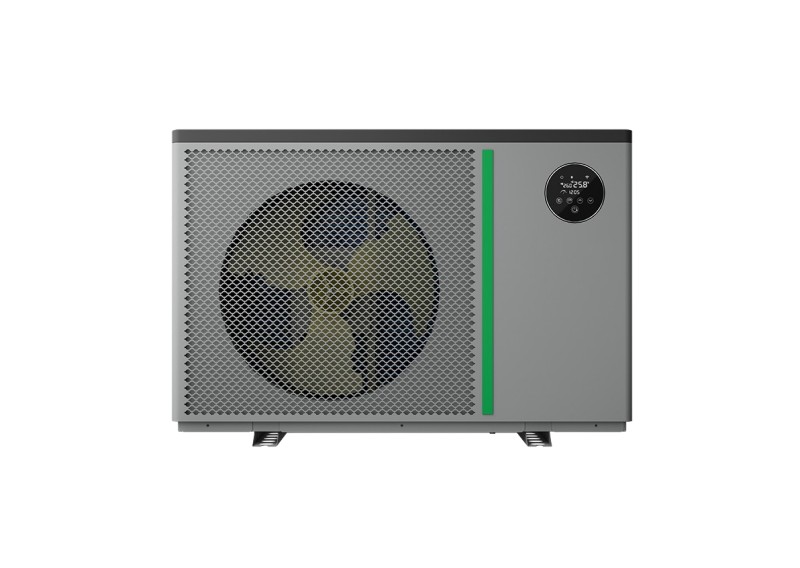
What Is Refrigerant? Core Definition
Refrigerant is a heat-transfer fluid that cycles through the vapor-compression refrigeration cycle, changing state between liquid and gas as it absorbs heat from indoor spaces and releases it outdoors.
In an HVAC system, refrigerant travels through four key components:
1. Evaporator coil – absorbs heat from indoor air, causing liquid refrigerant to evaporate into a low-pressure gas
2. Compressor – compresses the gas into a high-pressure, high-temperature vapor
3. Condenser coil – releases absorbed heat to the outdoor air, condensing the gas back into a liquid
4. Expansion valve – reduces the liquid's pressure, cooling it down before it re-enters the evaporator
This continuous cycle is what keeps your home cool in summer and—in heat pump systems—warm in winter.
How Does Refrigerant Work? The Step-by-Step Cycle
Stage | Component | State Change | What Happens |
1 | Evaporator | Liquid → Gas (evaporation) | Absorbs heat from indoor air, cooling the space |
2 | Compressor | Low-pressure gas → High-pressure gas | Compresses vapor, raising temperature and pressure |
3 | Condenser | Gas → Liquid (condensation) | Releases absorbed heat to the outdoor environment |
4 | Expansion Valve | High-pressure liquid → Low-pressure liquid | Drops pressure and temperature, ready to repeat cycle |
Key takeaway: The refrigerant itself is not consumed—it circulates continuously, making it a permanent component of the sealed system.
Major Refrigerant Types: CFCs, HCFCs, HFCs, HFOs & Natural Refrigerants
Refrigerants are categorized primarily by their chemical composition and environmental impact:
Category | Examples | ODP (Ozone Depletion Potential) | GWP (Global Warming Potential) | Status |
CFCs | R-12 | High (1.0) | High | Banned globally |
HCFCs | R-22 (Freon) | Moderate (0.055) | 1,810 | Phased out in developed countries |
HFCs | R-134A, R-410A, R-32 | Zero | 1,430 / 2,088 / 675 | Being phased down under Kigali Amendment |
HFOs | R-1234yf, R-1234ze | Zero | < 1 | Emerging replacement for HFCs |
Natural | R-290 (Propane), R-744 (CO₂), R-717 (Ammonia) | Zero | 3 / 1 / 0 | Growing adoption; flammable or toxic in some cases |
Comparative Analysis: Common Refrigerants in Detail
R-22 (Freon) – The Banned Legacy Refrigerant
·Type: HCFC
·GWP: 1,810
·ODP: Moderate
·Status: Production and import banned in the U.S. since 2020 (EPA)
·Key Fact: Once the dominant refrigerant in residential AC, R-22 is now illegal to produce or import. Systems using R-22 must be retrofitted or replaced if they leak, as recycled R-22 is extremely expensive.
R-410A – The Current Industry Standard (Being Phased Out)
·Type: HFC (blend of R-32 and R-125)
·GWP: 2,088
·ODP: Zero
·Status: Widely used in new systems since 2010; production being phased down under EPA AIM Act
·Key Fact: R-410A operates at higher pressures than R-22, requiring specially designed components. It does not deplete ozone but has a high GWP, making it a target for replacement.
R-32 – The Lower-GWP HFC Alternative
·Type: HFC (single-component)
·GWP: 675
·ODP: Zero
·Status: Increasingly adopted in new residential systems globally (especially Asia/Europe)
·Key Fact: R-32 has approximately 30% lower GWP than R-410A, offers slightly higher energy efficiency, and requires less refrigerant charge. It is mildly flammable (A2L rating), requiring specific handling precautions.
R-134A – The Automotive & Medium-Temperature Standard
·Type: HFC
·GWP: 1,430
·ODP: Zero
·Status: Commonly used in automotive AC, commercial refrigeration, and chillers; facing regulatory restrictions
·Key Fact: While non-flammable, R-134A's high GWP has led to its replacement by R-1234yf in new vehicles under EU MAC Directive.
R-290 (Propane) – The Ultra-Low-GWP Natural Refrigerant
·Type: Natural refrigerant (hydrocarbon)
·GWP: 3 (virtually negligible)
·ODP: Zero
·Status: Rapidly adopted in light-commercial and residential heat pumps, especially in Europe and China
·Key Fact: R-290 offers excellent thermodynamic properties and energy efficiency, but is highly flammable (A3 rating) , requiring rigorous safety standards and leak-detection systems. Its future is bright, especially in systems with low refrigerant charge.
R-454B – The Next-Generation Replacement for R-410A
·Type: HFO/HFC blend (R-32 + R-1234yf)
·GWP: ~466
·ODP: Zero
·Status: Being adopted by major manufacturers (e.g., Trane, Carrier) as a direct replacement for R-410A in residential AC and heat pumps
·Key Fact: R-454B offers a GWP reduction of approximately 78% compared to R-410A, with similar system performance. It is mildly flammable (A2L) and requires proper training and equipment for handling. Major OEMs are transitioning to R-454B through a phased-in approach starting 2024–2025.
Quick Reference: Refrigerant Comparison Table
Refrigerant | Type | GWP | ODP | Flammability | Primary Application | Future Outlook |
R-22 | HCFC | 1,810 | Moderate | A1 (non-flammable) | Legacy residential AC | Banned |
R-410A | HFC | 2,088 | Zero | A1 | Current residential/commercial AC | Phasing down |
R-32 | HFC | 675 | Zero | A2L (mildly flammable) | Residential AC, heat pumps | Growing adoption |
R-134A | HFC | 1,430 | Zero | A1 | Automotive, chillers | Phasing down |
R-290 | Natural (HC) | 3 | Zero | A3 (highly flammable) | Light-commercial, heat pumps | Expanding |
R-454B | HFO/HFC blend | ~466 | Zero | A2L | Next-gen residential AC/heat pumps | Future standard |
Which Refrigerants Are Banned or Being Phased Out?
Regulatory action has been the primary driver of refrigerant transitions:
·CFCs (e.g., R-12): Banned globally under the Montreal Protocol due to ozone depletion.
·HCFCs (e.g., R-22): Production and import phased out in developed countries (U.S. completed in 2020).
·HFCs (e.g., R-410A, R-134A): Being phased down under the Kigali Amendment to the Montreal Protocol and the U.S. EPA AIM Act, with a target to reduce HFC production by 85% by 2036.
The replacements are primarily HFOs (e.g., R-1234yf) and mildly flammable A2L refrigerants like R-32 and R-454B, alongside natural refrigerants like R-290 which have near-zero environmental impact.
The Future of Refrigerants: What to Expect
Key Trends
Trend | Implication |
Lower GWP mandates | All new systems will use refrigerants with GWP < 750 by 2025 in many regions |
A2L (mildly flammable) adoption | Technicians must be trained in new safety protocols and leak detection |
R-290 (propane) expansion | Expected to become dominant in small-charge systems (heat pumps, water heaters) |
System redesign | New refrigerants require optimized compressors, heat exchangers, and controls |
Retrofit vs. replace | Most R-410A systems will need full replacement—not just recharging—when transitioning |
What This Means for You
·Homeowners: When replacing your AC or heat pump, you will likely be offered a system with R-32, R-454B, or R-290 in the near future. These systems are more efficient and environmentally friendly—but ensure your installer is certified for A2L/A3 refrigerant handling.
·HVAC Contractors: Investing in training for A2L and A3 refrigerant handling is no longer optional—it's a business imperative.
·Facility / Procurement Managers: Factor refrigerant transition into lifecycle planning. New equipment specifications should prioritize lower-GWP options to future-proof your assets.
Why You Can Trust This Guide
This guide is based on current EPA regulations, AIM Act timelines, manufacturer transition announcements (Trane, Carrier, Daikin, etc.), and international standards from ASHRAE and the Montreal Protocol/Kigali Amendment. We recommend always verifying local regulations and consulting with certified HVAC professionals for site-specific decisions.
Final Recommendation – Stay Informed & Plan Ahead
Refrigerant regulations are changing faster than ever. Whether you are purchasing a new system, maintaining an existing one, or specifying equipment for a commercial project, understanding refrigerant types and their environmental impact is essential.
·For replacements: Choose systems using R-32, R-454B, or R-290 where available and code-compliant.
·For existing R-22 systems: Plan for replacement rather than costly recharging.
·For contractors: Get A2L-certified training now—the transition is already underway.
If you have any questions about heat pumps products, please contact us, Our technical team will be response you in 24hours.
Interested In Distributing High End Heat Pump Products?
咨询表单总
Name*
*Email Address*
*Company Name
Phone/WhatsApp
Why Contact Us?*
*Message*
*Verification code