
What Is a Heat Pump? The Definitive Guide to Principles, Types, and Applications
What Is a Heat Pump? The Definitive Guide to Principles, Types, and Applications
Introduction: Beyond Heating – The All-in-One Climate Solution
When most people hear "heat pump," they think of winter warmth. But in reality, modern heat pump systems offer far more than seasonal heating. Unlike conventional boilers or gas furnaces that rely on fuel combustion, a heat pump operates as an electrically driven thermal transfer device—moving existing heat from cooler outdoor environments into your living or working space. The result? Year-round comfort, drastically lower carbon emissions, and up to 300–400% efficiency compared to traditional resistive or fossil-fuel-based systems.
In this comprehensive guide, we break down the core operating principles, compare key system types, and help you identify the optimal heat pump configuration for your residential, commercial, or industrial project. Whether you're retrofitting an existing building or planning new construction, this guide equips you with the technical knowledge to make an informed decision.
What Is a Heat Pump? Core Definition & Operating Logic
From an engineering standpoint, a heat pump is an electrically powered thermodynamic device that transfers thermal energy from a low-temperature source (ambient air, groundwater, or soil) to a higher-temperature sink (indoor air, hydronic loops, or domestic hot water tanks). This is achieved through a vapor-compression or absorption cycle, requiring only a small electrical input to drive the compressor and fans.
Three Primary Functions of a Heat Pump System
Function | Operating Principle |
Heating Mode | Extracts latent heat from outside air, ground, or water and discharges it indoors via air handlers, radiators, or underfloor piping. |
Cooling Mode | Reverses the refrigerant flow using a four-way reversing valve, expelling indoor heat to the outdoors—identical to a standard air conditioner but with higher seasonal efficiency. |
Domestic Hot Water (DHW) | Integrated or standalone heat pump water heaters supply sanitary hot water at 50–65°C, serving both residential and light-commercial demands. |
With global regulatory shifts toward decarbonization, heat pumps are increasingly recognized as the cornerstone of next-generation HVAC infrastructure.
Heat Pump vs. Air Conditioner: What Sets Them Apart?
While both systems use similar core components (compressor, evaporator, condenser, expansion valve), the critical differentiator is the reversing valve.
Feature | Air Conditioner | Heat Pump |
Cooling | ✅ Yes | ✅ Yes |
Heating | ❌ No (requires separate furnace/boiler) | ✅ Yes (built-in reversal) |
Year-Round Operation | Seasonal | Continuous |
DHW Integration | Rare | Common in advanced models |
In essence, a heat pump replaces both an AC unit and a primary heating source, delivering a unified, space-saving, and energy-optimized solution for all seasons.
Heat Pump Classification: A Technical Breakdown
Selecting the right heat pump depends on your climate, building structure, available energy sources, and load profile. Below is a structured taxonomy to guide your evaluation.
1. By Energy Source (Heat Sink/Source)
·Air Source Heat Pump (ASHP) – Extracts heat from outdoor air. Widely adopted due to lower installation costs and simple retrofitting.
oAir-to-Water: Transfers heat to a hydronic system (underfloor heating, radiators, DHW tanks). Ideal for whole-house heating + hot water.
oAir-to-Air: Delivers conditioned air directly via ducted or ductless indoor units. Best for spaces without hot water demand.
·Water Source Heat Pump (WSHP) – Utilizes lakes, rivers, or groundwater as a stable thermal reservoir. Offers higher COP (Coefficient of Performance) and consistent output, suitable for hotels, hospitals, and commercial complexes with nearby water access.
·Ground Source Heat Pump (GSHP) – Relies on buried ground loops (vertical or horizontal) to exchange heat with stable subterranean temperatures. Despite higher upfront drilling costs (2–3× ASHP), GSHPs deliver superior low-temperature performance and 20+ year system lifespans, making them cost-effective for large villas, schools, and retail centers.
2. By System Architecture & Application
·EVI Low-Temperature Heat Pump – Incorporates Enhanced Vapor Injection (EVI) technology with two-stage compression and mid-stage refrigerant injection. Maintains rated heating capacity even at -25°C, tailored for severe cold climates.

·Ducted / Central Heat Pump – Uses a hydronic air handler or fan coil unit to distribute conditioned water throughout the building. Ensures uniform temperature zones and seamless integration with existing radiator/underfloor networks.
·Split / Ductless Heat Pump – Comprises an outdoor condensing unit and one or more wall-/ceiling-mounted indoor evaporators. Each zone is independently controllable, maximizing occupant comfort and reducing standby losses.
·VRF (Variable Refrigerant Flow) Heat Pump – An advanced multi-split system that modulates refrigerant flow to match zone-specific loads. Capable of simultaneous heating and cooling in different areas—ideal for office towers, hotels, and mixed-use developments.
·Gas Absorption Heat Pump – Fueled by natural gas or propane, these units use an absorption cycle rather than electric compression. Suitable for large-scale industrial heating where gas infrastructure is readily available.
·Hybrid Heat Pump – Combines an electric heat pump with a gas furnace backup. The control logic automatically selects the most cost-efficient heat source based on outdoor temperature and fuel prices.
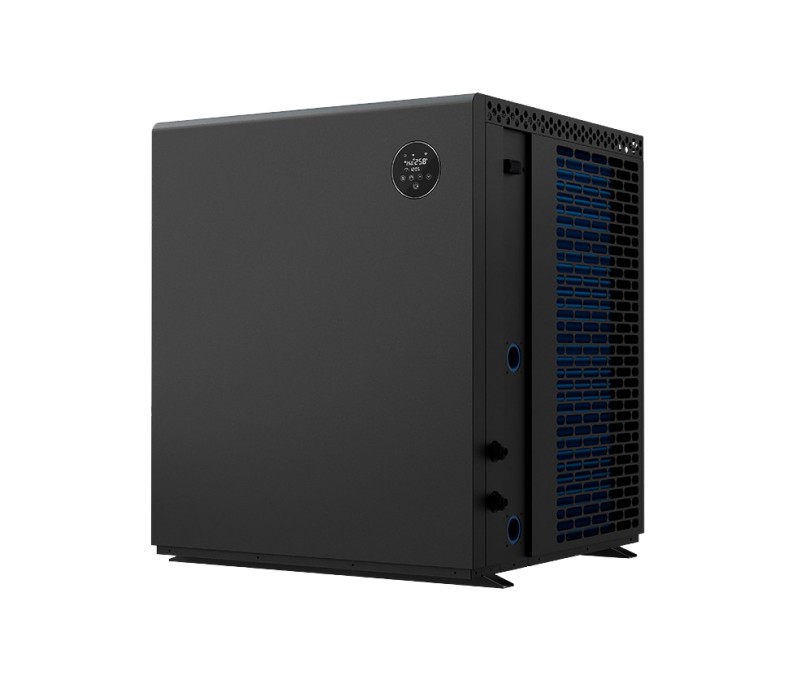
·Pool Heat Pump – Dedicated to swimming pool heating, extracting ambient heat to maintain water temperatures between 26–30°C, even during cooler months.
3. By Refrigerant Type (Environmental & Safety Considerations)
Refrigerant | GWP (100-yr) | Flammability | Application Suitability |
R290 (Propane) | 3 | Mildly flammable (A3) | Residential & commercial; superior heat transfer; preferred under F-gas phase-down regulations. |
R32 | 657 | Mildly flammable (A2L) | Widely used in ASHPs; acceptable efficiency but facing restrictions in EU/UK. |
R410A | 2088 | Non-flammable (A1) | Legacy standard; being phased out in new installations under Kigali Amendment. |
R134A | 1430 | Non-flammable (A1) | Common in medium-temperature applications; replacement with lower-GWP alternatives ongoing. |
Pro Tip: For new projects, prioritize R290-based units where local safety codes permit—they offer the lowest environmental footprint and future-proof your investment against tightening regulations.
Application Scenarios: Matching System Capability to Demand
Heat pumps are not one-size-fits-all. Below is a functional matrix to align your needs with system capabilities:
·Heating-Only – Basic ASHP or GSHP configured for space heating. Suitable for warm climates or backup heating roles.
·Cooling-Only – Reversible units in cooling mode; effectively a high-efficiency AC.
·Heating + Cooling + DHW – Integrated air-to-water heat pumps with a dedicated hot water tank. Provides 3-in-1 functionality for residential and light-commercial use.
·Underfloor Heating Integration – Low-temperature (35–45°C) operation pairs perfectly with radiant floor systems, maximizing COP.
·Pool Heating – Specialized units with titanium heat exchangers to resist chlorine corrosion.
Investment Rationale: Why Heat Pumps Are a Future-Proof Asset
Yes—heat pumps offer one of the highest ROI among building energy upgrades. Consider the following quantitative advantages:
·Energy Efficiency: Seasonal COP ranges from 3.0 to 4.5, meaning 1 kWh of electricity delivers 3–4.5 kWh of thermal output—3× more efficient than electric resistance heating.
·Operating Cost Savings: Compared to oil or LPG boilers, annual running costs can be reduced by 30–50%, depending on local electricity and fuel tariffs.
·Carbon Reduction: Switching from a gas furnace to an ASHP can cut Scope 1 emissions by 2–4 tons CO₂ per year per household.
·Incentive Availability: Many regions (US IRA, EU Recovery Fund, UK Boiler Upgrade Scheme) offer rebates covering 20–50% of installed costs, significantly shortening payback periods to 3–7 years.
While initial capital expenditure remains higher than conventional systems, the combination of operational savings, extended equipment life (15–20 years), and regulatory compliance makes heat pumps a strategically sound investment for property owners, facility managers, and developers alike.
Final Recommendation
To maximize system performance and ROI, always engage a certified HVAC engineer or consult directly with a reputable heat pump manufacturer for a site-specific load calculation, source viability assessment, and refrigerant selection advice. The right match—between climate, building envelope, and system type—is the key to unlocking the full potential of heat pump technology.
KLR Group is the professional OEM heat pump manufacturer in China, we manufacture full range heat pump products range: air source heat pump, water source heat pump, pool heat pump, heat pump water heater, we not only offer you the standard models, but also custom the heat pumps according to your special need. please send us you requirement detail, we can check it out by our professional team. Direct Email: klrheatpump@163.com: Whatsapp: +8613424531875
Interested In Distributing High End Heat Pump Products?
咨询表单总
Name*
*Email Address*
*Company Name
Phone/WhatsApp
Why Contact Us?*
*Message*
*Verification code