
Top 6 most cost-effective pool heating methods for 2025
Cost-Efficient Pool Heating Solutions: Say Goodbye to High Energy Bills!
Are you searching for affordable ways to heat your swimming pool? Many pool owners, just like you, love having a warm pool but often dread the high energy costs of a heat pump. It's true: even with a highly efficient system, the cost of heating a pool can be significant.
Don't let expensive pool heating stop you from enjoying your swim! This guide will help you discover how to drastically cut down on your pool heating expenses. In this article, we'll reveal the top 6 most cost-effective pool heating methods for 2025.
By reading this, you'll learn:
The real reasons behind high pool heating costs.
Alternative pool heating options beyond traditional heat pumps.
Smart strategies to reduce energy consumption for a warmer pool.
Expert-backed advice on sustainable and budget-friendly pool heating.
Ready to find the perfect balance between a comfortable pool and a healthy budget? Let's dive into cheap ways to heat your pool!
1.Solar pool heating
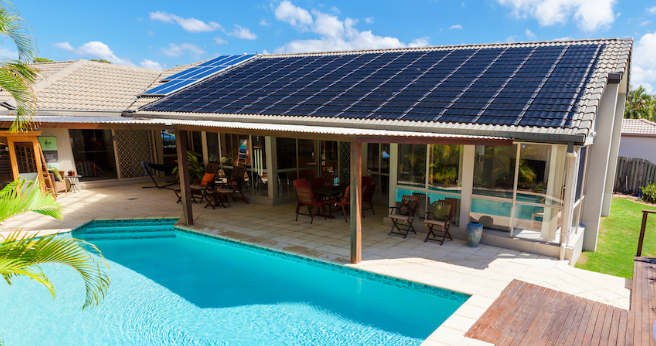
Solar heating stands out as an exceptionally efficient and economical method for warming your swimming pool. Beyond the minimal cost of powering the water pump to circulate water through the panels, the energy itself is essentially free. However, a key limitation is its frequent inability to meet the full heating demands for an entire swimming season. This often stems from insufficient sunlight, overcast conditions, or the specific positioning of your home. Despite these drawbacks, if solar is an option for you, it can become a highly cost-efficient system when strategically paired with a poolheat pump.
2)Day time
If you use a heat pump to warm your pool, the specific time of day you operate it will significantly impact its energy efficiency. Since heat pumps extract heat from the surrounding air, the optimal time to run them is during the warmest period of the day.
The most effective way to achieve this is by adjusting the settings of your pool's filtration system. By scheduling its operation to coincide with the warmest hours, your heat pump will receive the necessary water flow and run simultaneously. This ensures your heat pump operates at its peak performance when ambient temperatures are highest, making it the most cost-efficient method for heating your pool.

3)Coefficient of Performance (COP) for Pool Heat Pumps
When selecting a pool heat pump, the Coefficient of Performance (COP) is a critical metric to consider. COP represents the heat pump's efficiency rating, calculated as the ratio of energy output to energy input. Simply put, a higher COP indicates a more efficient heat pump.
As you compare different models, remember that a higher COP directly translates to greater cost efficiency. The percentage difference between two COP ratings will reflect the potential percentage savings in operational costs. For instance, a heat pump with a COP of 6.0 is significantly more efficient than one with a COP of 4.0, leading to substantial long-term savings on your energy bills.
What does this mean for you? It means you should aim to purchase the highest COP-rated unit that your budget permits. However, it's equally crucial to ensure the model you choose has sufficient capacity to meet your specific pool heating demands. A high COP unit that's undersized for your pool won't perform optimally.
If you've already invested in a heat pump, it's important to be aware that ambient outside temperature directly impacts its efficiency. Heat pumps extract warmth from the air, so their performance will be better on warmer days.

4)The Key to Reducing Pool Heating Costs with Pool Blankets
A significant portion of heat loss in any pool—upwards of 75%—occurs through evaporation from the water's surface. Consequently, controlling this evaporative loss is paramount to substantially reducing your heating expenses. Several effective methods can help you achieve these savings.
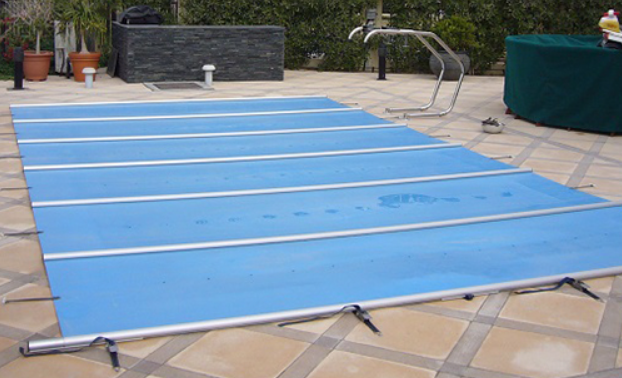
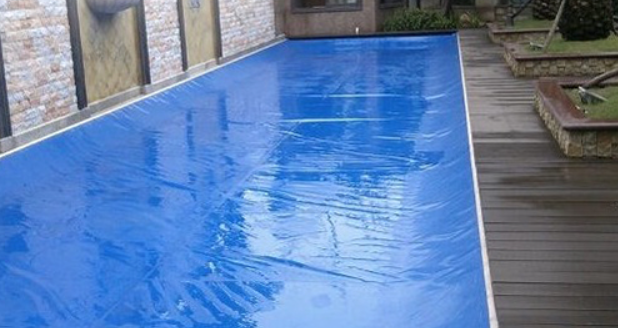
One highly effective approach is the use of a solid pool blanket. Two common types are widely available. The first features automated deployment, utilizing tracks and a motorized system to smoothly roll a heavy-duty vinyl blanket across the pool's surface. While these systems represent a notable investment, their value is exceptional. They provide a complete seal over the pool, and their robust construction is typically designed to bear the weight of a child, offering a crucial safety feature. Beyond safety, they virtually eliminate evaporation, leading to outstanding efficiency.
The second type, significantly less expensive but offering no safety value, is the floating blanket. This is essentially a thin vinyl sheet incorporating numerous small air bubbles, much like large-scale bubble wrap. This type of blanket excels at heat retention by effectively preventing evaporation. However, it's crucial to understand that these are not safety blankets and can, in fact, pose a safety risk. Due to their free-floating nature, they can become an entrapment hazard if a child or pet ventures onto the pool surface.
5) Shielding Your Pool Environment from the Wind
Wind significantly contributes to heat loss from your pool's surface. When wind creates ripples or small waves, it dramatically increases the water's surface area. Since heat loss through evaporation is directly influenced by water temperature, air temperature, humidity, and the pool's surface area, these wind-induced ripples accelerate evaporative cooling.
Therefore, creating a wind-shielded pool environment is an excellent strategy to substantially reduce your heating costs. By minimizing wind exposure, you maintain a calmer water surface, which in turn limits the rate of evaporation and preserves your pool's warmth more effectively.
6)Optimizing Pool Temperature Set Point for Cost Efficiency
It's straightforward: the warmer you set your pool's water temperature, the higher your operational costs will be. Each one-degree Fahrenheit increase in temperature can lead to an approximate 15-18% rise in energy consumption. For instance, while an 88°F pool might feel luxuriously warm, maintaining it will be significantly more expensive than a pool kept at 85°F.
Just as individuals have varying comfort levels for indoor temperatures (something many couples can attest to!), personal preferences differ for pool water. The key takeaway is that warmer water directly correlates with reduced energy economy. We recommend finding the ideal balance that meets your comfort needs while remaining mindful of the associated running costs.
If you want to know more about swimming pool heat pumps products, please feel free to contact us.
Interested In Distributing High End Heat Pump Products?
咨询表单总
Name*
*Email Address*
*Company Name
Phone/WhatsApp
Why Contact Us?*
*Message*
*Verification code